Russian Attacks on Ukrainian Flour Mills and Disruption of Exports Threaten Global Food Security – Rodion Rybchynskyi at IAOM Eurasia 2026
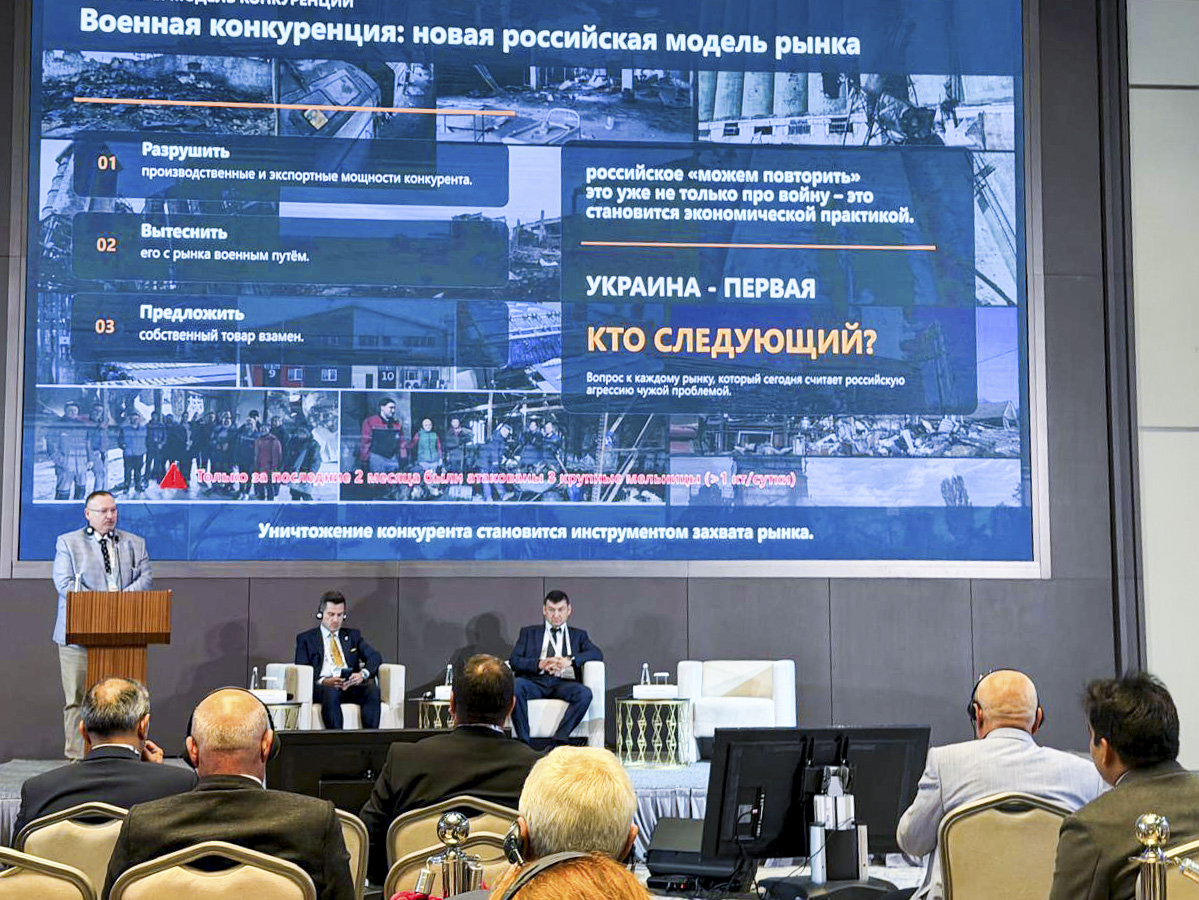
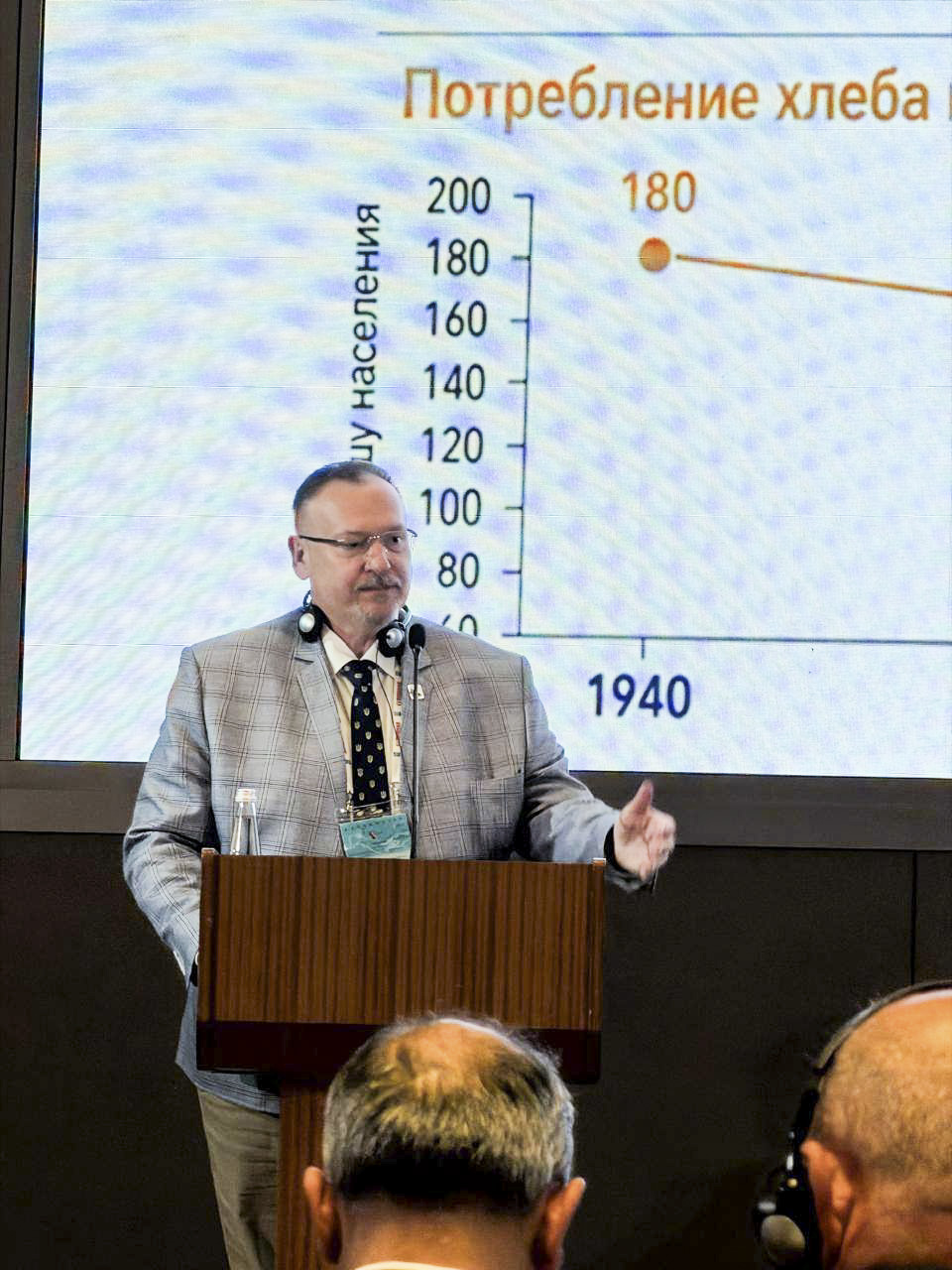
Over the past two months, three major Ukrainian flour mills have come under Russian attack, cargo throughput at the Greater Odesa ports has fallen more than fifteenfold, and shipping in the Black Sea has virtually ground to a halt. Despite the destruction of production facilities and export infrastructure, Ukraine’s flour milling industry continues to meet the country’s food needs, invest in production, and compete for international markets. Rodion Rybchynskyi, Director of The Union Millers of Ukraine, addressed the scale of the losses, the industry’s adaptation to wartime conditions, and the global consequences of Russian aggression during his presentation at IAOM Eurasia Conference & Expo 2026 in Tashkent, Uzbekistan, on September 29.
In his presentation, Rybchynskyi outlined the state of Ukraine’s grain processing industry in the fifth year of the full-scale war. He focused on the contraction of the domestic market, financial losses sustained by businesses, shifts in export trade, and growing threats to international food security.
According to the figures presented, Ukraine now has 466 operating flour mills, down from 678 before the full-scale invasion – a decline of 31%. In 2024, the industry produced 2.3 million tonnes of flour, against an installed production capacity of approximately 3.5 million tonnes. Domestic demand for flour fell to 2.1 million tonnes in 2025, compared with around 3 million tonnes before the war, representing a 30% contraction in consumption. Meanwhile, the operating margin of flour milling companies declined from 12% before the war to 8%.
Despite these challenges, companies continue to invest in their production facilities. Average annual capital investment reached UAH 1.212 billion in 2023–2025, compared with UAH 542 million in 2022. Companies primarily finance these investments through their own operating cash flows, with energy independence among their key priorities. They are also expanding specialised production, introducing technologies that deliver higher product yields, pursuing organic and halal certification, and gradually implementing ISO 22000, BRC, and FSSC 22000 standards.
Throughout the war, the flour milling industry has remained an essential pillar of Ukraine’s food security. Mills supply flour to the country’s eastern and southern regions, participate in procurement programmes to meet the needs of the Armed Forces, and support humanitarian relief efforts.
Another focus of the presentation was the findings of an independent, multi-year study on the quality and safety of Ukrainian wheat and flour. The research was conducted with the support of the Swiss Import Promotion Programme (SIPPO), an initiative of the Swiss State Secretariat for Economic Affairs (SECO) under Switzerland’s economic development cooperation framework.
The findings showed that the wheat samples analysed met EU milling standards, although protein levels were below the required thresholds during certain periods before recovering in 2025. Laboratory testing also found contaminant levels to be well below the EU’s maximum permitted limits, while the flour samples tested complied with European requirements.
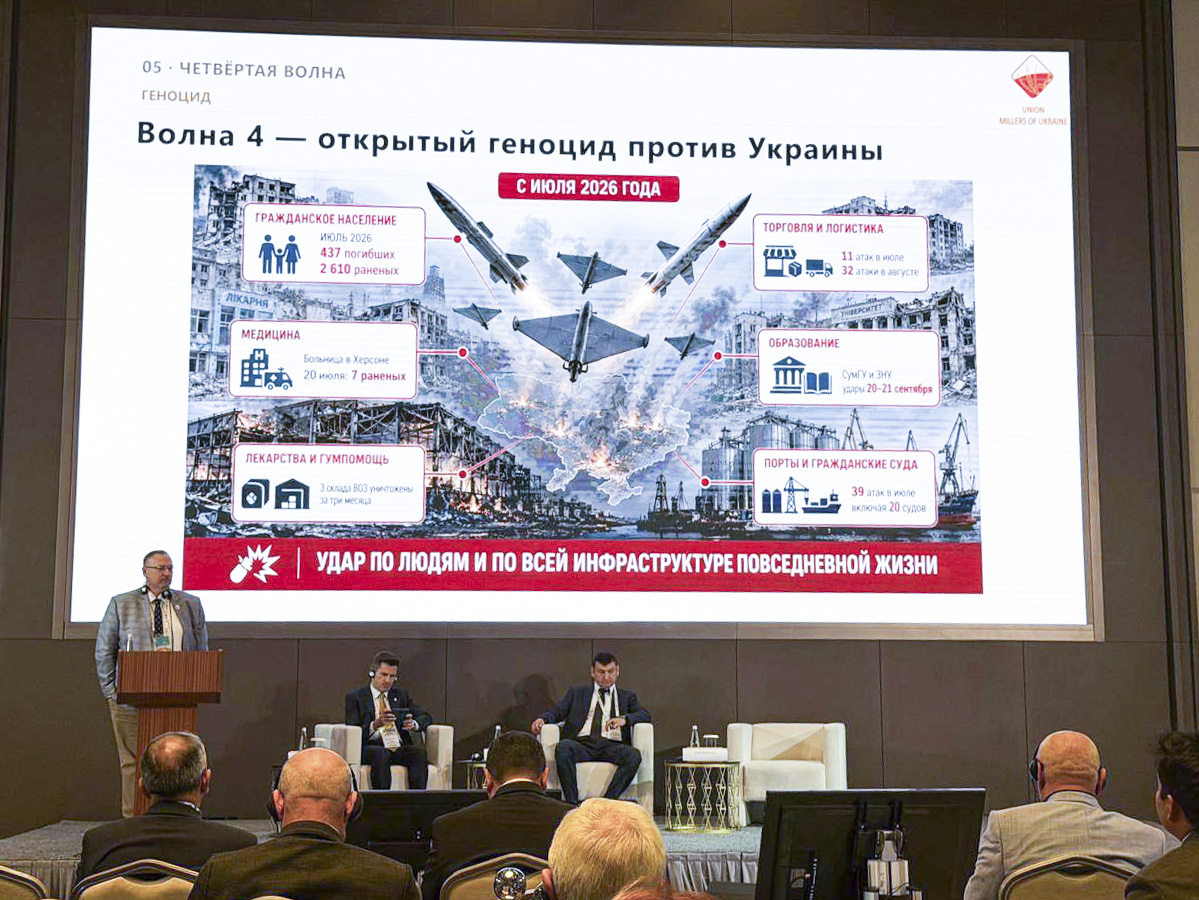
The most pressing part of the presentation addressed the latest wave of Russian attacks on Ukraine’s food production infrastructure. At the same time, conditions for maritime exports have deteriorated sharply. Since July 22, cargo throughput at the Greater Odesa ports has fallen more than fifteenfold. By late July, vessel arrivals had dropped to just one or two per day, falling to almost zero in August.
Disruptions to Ukraine’s export routes directly affect countries that depend on imported food supplies. According to the assessment presented, reduced shipments from Ukraine increase the risk of food shortages and rising prices on international markets.
In the concluding part of his presentation, Rybchynskyi examined the economic consequences of Russian aggression.
“Destroying a competitor has become a tool for capturing market share,” Rybchynskyi said, describing Russia’s approach to economic competition.
- Фотогалерея в новостях: